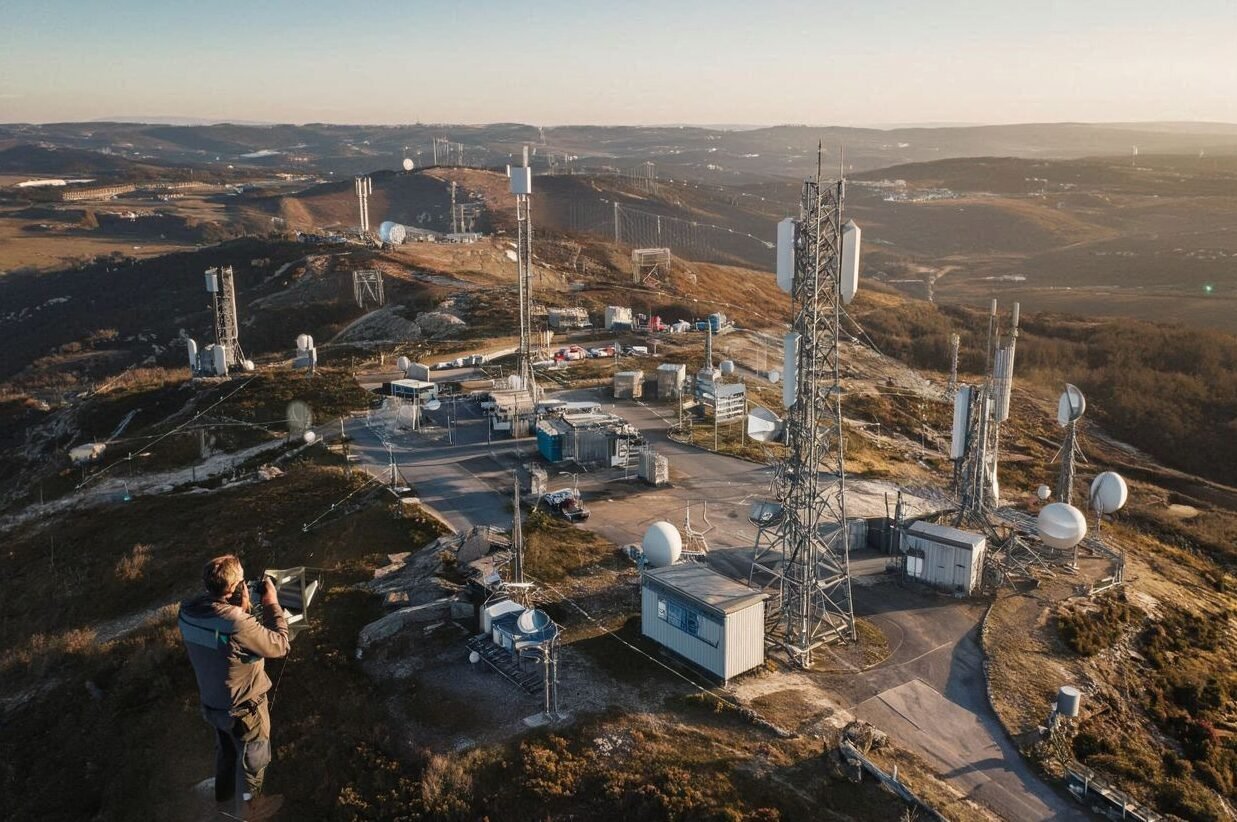
WHEN A SIMPLE CONFIGURATION IS NO LONGER ENOUGH
Extended radio network rental for complex and multi-site deployments
Request a quoteWhen communications need to cover large areas, multiple buildings, or geographically separate sites, a simple walkie-talkie fleet is no longer enough.
The answer is an extended radio network: repeaters, multi-site architectures, hybrid systems, or even trunking depending on the context.
Sabbah Communication designs and deploys on a rental basis extended radio network solutions focused on field reality, sized for actual operations — without over-engineering or dependence on complex systems.
Our priority: ensuring your teams can communicate wherever they need to, reliably and continuously.
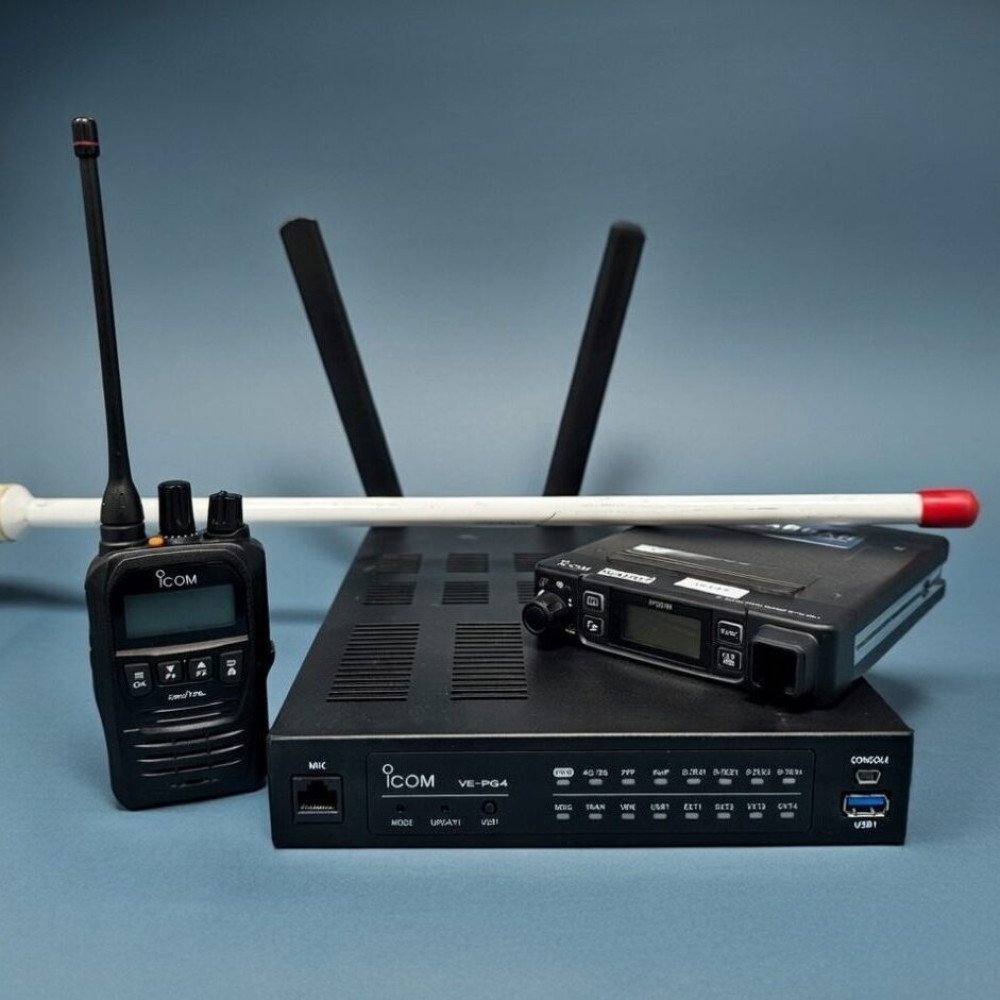
What is an extended radio network?
An extended radio network increases:
- Communication range
- Continuity between distant areas
- Reliability across complex or compartmentalised sites
It typically relies on:
- One or more radio repeaters
- A multi-site architecture
- Sometimes an IP or LTE interconnection as a complement
The goal is not to add complexity — it is to eliminate radio dead zones.
When do you need
an extended radio network?
Extended radio networks are relevant when:
- The site exceeds the range of a standard two-way radio
- Multiple buildings need to be covered
- The terrain has significant obstacles
(concrete, metal, elevation changes) - Teams are spread across large areas
Large industrial sites
Factories spanning dozens of hectares, port platforms, multi-building industrial zones
Logistics & multi-zone warehouses
Warehouses with distant zones, loading docks, separate buildings, HGV parking areas
extended
radio network
Large-scale events
Festivals, sporting events, multi-zone or multi-site gatherings
Local authorities and public infrastructure
Technical parks, municipal building networks, distant sites requiring coordination
The technical building blocks we use
We adapt the technology to the actual need — never the other way around.
VHF / UHF / DMR Radio Repeaters
They extend the radio coverage of a site or a group of nearby sites. In the majority of projects, one or two building blocks are sufficient.
We never stack technologies without an operational reason.
Typical use cases:
• Eliminating radio dead zones
• Covering an extended site
• Improving indoor signal penetration
Multi-site networks
Multiple repeaters or sites linked together to share communications across locations.
Typical use cases:
• Coordination between multiple locations
• Seamless radio continuity across distant sites
• Unified communications view, without a dedicated business supervision tool
Hybrid Radio + LTE Architectures
When radio alone is no longer sufficient, LTE provides the long-distance link between sites.
These hybrid architectures are often combined with RoIP interconnections, detailed on our Radio Interconnection page.
How to choose the right architecture?
SIMPLE REPEATERS
• Extended site with localised dead zones
• Need to improve indoor signal penetration
• Controlled budget, simple operation
MULTI-SITE NETWORK
• Multiple buildings or locations to connect
• Coordination between distant sites
• Moderate communication volume
HYBRID RADIO + LTE
• Very distant sites (> several km apart)
• Need for geolocation
• Mobile teams + fixed teams
TRUNKING
• Large number of users (50+)
• High communication density
• Requirement for strict call prioritisation
Not sure? → We assess your needs at no charge.
Contact UsWhat is trunking, exactly?
Trunking is a radio architecture that dynamically shares channels among a large number of users and groups.
In our work, trunking remains uncommon and is reserved for highly structured deployments.
It is not a technical requirement, but an organisational response to high communication volumes.
Large number of users
High communication density
Call prioritisation requirement
Structured operation with multiple user groups
Simple deployments
One-off events
Small or low-traffic teams
We only propose trunking solutions when the context genuinely calls for it.
In many cases, a well-dimensioned conventional DMR network is more reliable, simpler, and more cost-effective.
Temporary, semi-permanent
or long-term
Our extended radio networks can be deployed across different time horizons:
Long-term
Stable infrastructure requiring reliable year-round radio coverage
On-site coordination for film shoots
Semi-permanent
Sites in operation for several months, industrial projects, extended construction phases
Security
Temporary
Events, construction sites, exceptional deployments
Controlled implementation — nothing left to chance
An extended radio network cannot be improvised
Every project includes:
- Site topology validation
- Analysis of radio constraints (terrain, structures, RF noise)
- Coverage and audio quality testing
- Realistic sizing of the deployment
We never deploy an extended network without a prior site assessment
A simple network that works is always better than a complex, unstable architecture
Our approach to extended radio networks
We don’t build networks to look good on paper
We operate as a radio service provider and operator — not as an IT integrator or business platform vendor
Our approach is clear:
- Field reliability first
- Understandable and maintainable architectures
- No unnecessary dependency on heavy systems
- Full accountability for radio communication
Connection to radio interconnection
Extended radio networks reach their full potential when
combined with interconnection solutions:
These hybrid architectures are detailed on our Radio interconnection (RoIP / VPE) page
- Radio ↔ LTE
- Radio ↔ Wi-Fi
- Local site ↔ remote site
Why choose Sabbah Communication?
Choosing a radio communication solution goes beyond renting equipment. It is above all a matter of reliability, anticipation, and field experience.
For over 25 years, Sabbah Communication has supported organisers and technical teams on events of all sizes. Our added value rests on three pillars:
Proven expertise:
A thorough command of radio usage in events, logistics, industry and beyond — built in the field — enabling us to deliver reliable and well-adapted solutions
Tailored advice:
We analyse your organisation and site configuration to precisely size the radio solution to your actual operational needs.
Full responsiveness:
You benefit from a single point of contact — available, responsive, and familiar with your project and the realities of the field.